
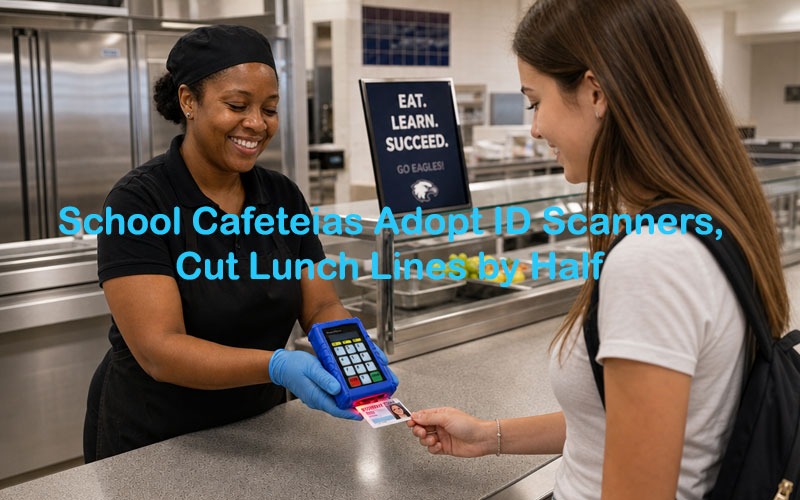
ID scanners for schools are cutting cafeteria wait times in half, and we’ve seen the change firsthand. Many schools schedule lunch periods for 25 to 30 minutes, yet students often have just 7 to 10 minutes to actually eat. The CDC recommends at least 20 minutes of seated eating time , making this gap a critical concern. In fact, over 92% of districts now use electronic POS systems . The change toward faster meal service is clear. We’re learning how student id barcode technology, school cafeteria scanners and school lunch scanners work together to eliminate bottlenecks. This piece gets into the measurable benefits of school nutrition scanners and the practical steps needed for implementation.
How School Cafeteria Scanners Transform Lunch Lines
What Student ID Barcode Technology Does
School cafeteria scanners read barcoded student ID cards at the point of sale and link each transaction to the correct account. Cafeteria staff scan student IDs to access lunch money accounts, check balances and add funds [1]. The system tracks services rendered and monitors students who qualify for programs like free lunch. This provides accurate reporting [1].
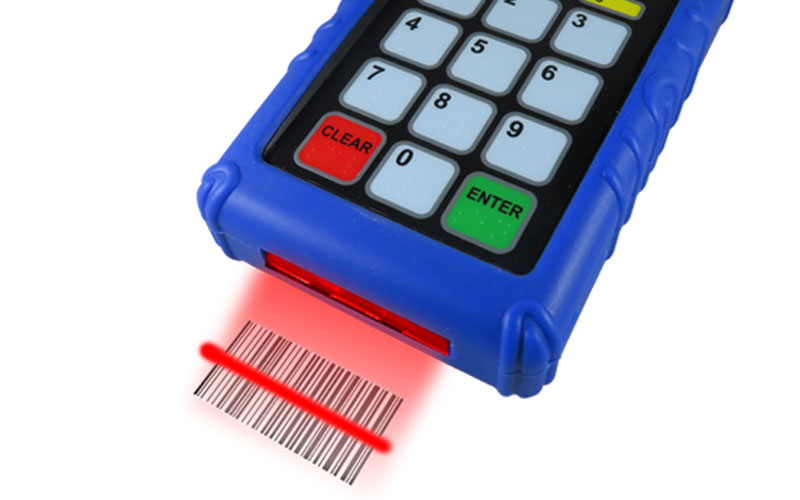
The technology supports multiple barcode formats. QR scanners can read both QR and 1D barcodes from any angle, while 1D scanners need barcodes to line up perfectly for reading [2]. This delivers a swift and effortless payment experience [2]. Students scan their ID cards through a USB scanner connected to the POS system, which registers their meal purchase live [1].
The Dual System: Scanners Plus PIN Pads
Schools rely on a combination of barcode scanners and PIN pads rather than a single identification method [2]. This approach addresses common problems: cards are often lost or left at home, and PINs can be forgotten or mistyped [2]. Staff intervention slows down the line when either method fails [2].
The dual system operates through a straightforward process. Students who have their ID cards scan them for a quick and near-instant action [2]. Those without cards use the PIN pad instead so no one is held up [2]. This prevents bottlenecks and keeps the line moving [2]. PIN pads feature large and easy-press keys on a 12-key membrane keypad for quick and accurate ID entry [1]. Many devices now support scanning of both standard barcodes and QR codes. This enables versatile and quick student identification [1].
No single method is foolproof, so using both scanners and PIN pads gives schools a more dependable solution [2]. Saving just a few seconds per transaction makes a big difference when you serve hundreds of students [2].
From 25-Minute Waits to 10-Minute Service
The equipment required has low-cost upgrades that are easy to use and compatible with most point-of-sale systems [2]. These tools require minimal maintenance and simple staff training [2]. Less time at the register gives students more time to eat and reduces stress over forgotten PINs or misplaced ID cards [2]. The process becomes smoother and more respectful overall [2].
Schools Report 50% Reduction in Cafeteria Wait Times
Measuring the Effect: Before and After Data
Schools that implement point of sale systems report wait times decreased by up to 70% compared to traditional methods [3]. The change from manual cash handling to digital transactions creates efficiency gains right away. Traditional cash transactions require students and staff to count bills and coins, averaging 30 seconds per transaction. Modern school lunch scanners complete the same transaction in just 5 seconds [3].
Cashless systems deliver much faster processing speeds. Mastercard research found that cashless school payments reduce transaction times by 75% [3]. QR code payments increased school transaction speeds by 40% in Singapore [3]. Contactless NFC cards make transactions instant [3].
How Much Time Students Gain
Research at an elementary school in a Southwestern state measured eating time over a 3-day period with 2nd through 4th grade students. Students who entered the meal line first had substantially more time to eat, with a mean of 17.8 minutes (SD = 1.8). Students who entered the meal line last had 12.4 minutes (SD = 1.8, p ≤0.001) [4].
Students at the end of the serving line faced a 13-minute wait. Almost half of the lunch period was consumed before they arrived at the table [4]. Students who exited the serving line first had 5.4 more minutes to eat compared to those who entered and exited last [4].
Peak Hour Performance Improvements
Cheshire High School serves about 900 of its 1,500 students across three lunch waves between 11:30 a.m. and 12:45 p.m. School officials set a goal to get students through the lunch line in 12 minutes or less. This gives them 13 minutes to eat their meals [5]. The school cafeteria barcode reader system targets this efficiency during peak service periods when hundreds of students need quick processing.
Benefits Beyond Faster Lines
School nutrition scanners deliver measurable improvements across multiple areas of cafeteria operations and cut wait times.
Self-Service Kiosks Enter the Scene
Self-checkout appeared in 1984 but gained traction decades later [12]. 96% of grocery stores provide self-service options now [12], with 75.5% of all kiosks installed in retail environments [12]. Retailers reported that 91% believe these systems boost sales, as 77% of customers prefer them [12].
More Time for Students to Eat and Socialize
Students need at least 20 minutes seated at a lunch table. This allows enough time to socialize and consume their foods [1]. Kids who get less than this threshold eat 13% less of their main entree and 12% less of their vegetables. They also drink 10% less milk [6]. So faster lines translate to better nutrition and more social interaction during meals. School meals offer students vital social support. They establish routines and provide stability that contribute to safety and connection [7].
Reduced Stress for Cafeteria Staff
Automated systems remove manual tasks that burden food service teams. Mobile technology eases workload by a lot. It eliminates the need to take orders manually and enter them into traditional POS terminals [8]. Staff members gain more time to focus on meal quality and student service rather than processing payments during peak hours [9]. Automation of inventory and production records prevents math mistakes and misread handwriting. It also stops incorrect data pulls [10].
Improved Meal Participation Rates
Student participation jumped 8% for school breakfast programs and 6.8% for school lunches between the 2022-23 and 2023-24 school years [11]. Every extra second in line suppresses participation. Students abandon lines if they think they’ll be late to class or won’t have time to socialize with friends [12].
Better Nutrition Tracking and Compliance
Cafeteria workers using digital systems achieve 97% accuracy in documenting students’ food and beverage choices [13]. School nutrition software makes advanced reporting possible. It tracks every student’s preference and supports inventory management and compliance with nutrition standards [14].
Improved Financial Accountability
Tracking every meal sold protects revenue and speeds service. It also reduces waste and strengthens compliance [12]. Student id barcode systems link each student to a transaction and classify sales correctly. They verify eligibility and pricing and flow into claim and financial reports [12].
What Schools Need to Implement School Lunch Scanners
Implementing id scanners for schools requires specific equipment, training protocols, system integration and security measures.
Cost and Equipment Requirements
School cafeteria barcode reader hardware starts at available price points. Handheld USB scanners cost approximately $175, while mobile barcode scanners begin at $299 [15]. Schools choose between orbital omnidirectional scanners and handheld USB wired models or Bluetooth wireless options [16]. All units come with a 3-year warranty and FCC approval [16]. The devices read both 1D and 2D QR codes. They feature adjustable audio feedback and have USB connectivity [17].
Staff Training and Student Onboarding
Most schools complete full setup within 2-3 weeks. This time frame covers training and parent onboarding [18]. Staff instruction on scanner operation and troubleshooting is simple [19]. Parents need guidance on online payment features and account management through the school nutrition scanner system.
Integration with Existing Payment Systems
The school lunch scanner must sync payment information back to the Student Information System. It should work with third-party software currently in use [20]. This means compatibility with common platforms like MealTracker and CafeConnect [20]. Student IDs are alpha-numeric and allow special characters such as dashes. They have a 20-character limit with no duplicates [21].
Addressing Privacy and Security Concerns
Security measures must meet PCI standards with 256-bit PCI-compliant digital encryption to protect data [20]. Multi-factor authentication provides an extra layer of protection for accounts [22]. Systems rely on strong cybersecurity, with credit card companies offering additional fraud protection [23].
Conclusion
School cafeteria scanners have proven valuable in districts nationwide. The evidence shows consistent 50-70% reductions in wait times and gives students the seated eating time they need. This technology addresses critical CDC recommendations and improves nutrition outcomes and staff efficiency. Schools get a reliable, affordable path forward with the dual system of barcode readers and PIN pads. Student ID scanning technology delivers real improvements for the whole school community with clear implementation and measurable returns.
FAQs
Q1. How much do school cafeteria ID scanners typically cost? Handheld USB scanners for school cafeterias start at approximately $175, while mobile barcode scanners begin at around $299. Schools can choose between orbital omnidirectional scanners, handheld USB wired models, or Bluetooth wireless options, all of which come with a 3-year warranty and FCC approval.
Q2. How long does it take to implement a school lunch scanner system? Most schools complete the full setup within 2-3 weeks, including staff training and parent onboarding. The implementation process involves straightforward staff instruction on scanner operation and troubleshooting, as well as guidance for parents on online payment features and account management.
Q3. What security measures protect student information in cafeteria payment systems? School lunch scanner systems use 256-bit PCI-compliant digital encryption to protect student data and meet PCI security standards. Multi-factor authentication provides an additional layer of account protection, and systems rely on industry-leading cybersecurity with credit card companies offering extra fraud protection.
Q4. Why do schools use both ID scanners and PIN pads instead of just one method? The dual system addresses common problems where cards are often lost or left at home, while PINs can be forgotten or mistyped. Students with ID cards can scan them for near-instant transactions, while those without cards use the PIN pad instead, ensuring no one is held up and preventing bottlenecks in the lunch line.
Q5. How do faster lunch lines improve student nutrition? When students have less than 20 minutes of seated eating time, they consume 13% less of their main entree, 12% less of their vegetables, and drink 10% less milk. By reducing wait times from up to 13 minutes to just a few minutes, scanner systems give students more time to actually eat their meals, leading to better nutrition outcomes.
AlphaTechs USA offers a wide selection of Innovative Scanners for School Cafeteria POS Systems
Specifically created for US school cafeterias, our pin pads, 1D scanners and 1D/2D QR barcode scanners and RFID code readers are compatible with all school lunch POS systems. Each unit comes with a free complementary anti-shock cover designed to keep your devices safe at all time.
Stand-alone readers are also available including orbital scanners, USB handheld barcode scanners as well as Bluetooth handheld barcode scanners.
For any school cafeteria POS scanner question, feel free to contact us.
References
[1] – https://pmc.ncbi.nlm.nih.gov/articles/PMC4698073/
[2] – https://www.genovation.com/faster-cafeteria-lines-with-student-id-pin-pads-and-barcode-scanners/
[3] – https://alphatechsusa.com/school-pos-systems-cut-lunch-wait-times/
[4] – https://schoolnutrition.org/journal/fall-2018-time-to-eat-school-lunch-affects-elementary-students-nutrient-consumption/
[5] – https://www.govtech.com/education/k-12/Connecticut-High-School-Scans-Kids-Through-Lunch-Line.html
[6] – https://www.npr.org/sections/thesalt/2015/09/24/439487395/kids-who-are-time-crunched-at-school-lunch-toss-more-and-eat-less
[7] – https://bestpractices.nokidhungry.org/resource/how-school-meals-can-support-social-emotional-school-climates
[8] – https://restauranttechnologynews.com/2025/02/how-mobile-technology-can-drive-restaurant-efficiency-while-reducing-staffing-shortages-and-burnout/
[9] – https://modernrestaurantmanagement.com/empowering-restaurant-staff-how-technology-solutions-reduce-burnout-and-boost-efficiency/
[10] – https://www.linq.com/blog/automating-k12-nutrition-to-solve-rising-costs-and-staff-shortages/
[11] – https://www.k12dive.com/news/school-meal-participation-on-the-rise-amid-growing-interest-in-cep/746781/
[12] – https://blog.heartlandschoolsolutions.com/k-12-school-budgets-are-tight-heres-why-tracking-meal-sales-matters-more-than-ever
[13] – https://pmc.ncbi.nlm.nih.gov/articles/PMC5392376/
[14] – https://www.revtrak.com/blog/school-nutrition-software
[15] – https://www.5starstudents.com/Pricing/Equipment
[16] – https://alphatechsusa.com/scanners/
[17] – https://alphatechsusa.com/cafeteria-keypads-scanners/
[18] – https://hashmato.com/school-meals-online-payment-services/
[19] – https://www.revtrak.com/blog/online-lunch-payment-system
[20] – https://harrisschoolsolutions.com/blogposts/how-to-find-the-best-contactless-payment-system-for-your-school-nutrition-program/
[21] – https://help.navigate360.com/students_NVM/student-school-id-barcode-rfid-reading
[22] – https://www.linq.com/solutions/payments/
[23] – https://www.linq.com/blog/cashless-schools-and-digital-payment-security/