
It was great seeing everybody at SNA ANC in Charlotte this week. Here is a quick recap of the event.
SNA ANC 2026 delivered pivotal policy announcements that will reshape how school meal programs operate throughout the nation. We joined approximately 7,000 attendees[15], including 3,500 school nutrition operators[15], at this year’s anc national conference to understand the regulatory shifts affecting our daily work. The sna national conference 2026 featured more than 120 education sessions[15] designed to address these changes and their operational implications. School nutrition professionals must work through the decisions made at anc conference 2026. Understanding these policy updates becomes critical for program compliance and student success. This recap breaks down the major announcements from sna conference 2026 and their practical effect on your meal programs.
What Policy Changes Were Announced at SNA Conference 2026
The conference spotlighted SNA’s 2026 Position Paper, which outlined advocacy priorities drafted from member feedback[1]. Federal nutrition standards updates took center stage, with schools preparing to line up with the 2020-2025 Dietary Guidelines for Americans[2]. The USDA finalized sodium reduction targets requiring a 15% decrease for lunch and 10% for breakfast by July 1, 2027[13]. Current limits remain in effect through June 30, 2027. This gives programs time to adjust menus and procurement strategies[16].
Added sugar restrictions will phase in between fall 2025 and fall 2027. Schools must limit added sugars in cereals and yogurt starting fall 2025, with weekly calories from added sugars capped at 10% by fall 2027[17]. The whole grains requirement stays at 80% of weekly offerings. This maintains flexibility for regional priorities like white rice or tortillas[5].
Income eligibility guidelines for the 2026-27 school year set free meal qualification at 130% of federal poverty level, which equals $3,575 monthly for a four-person household[6][7]. Buy American provisions now impose limits on non-domestic food purchases: 10% in school year 2025-26, dropping to 5% by 2031-32[8]. USDA announced $20 million in equipment grants to support kitchen upgrades[17].
How ANC National Conference Decisions Impact Daily Operations
Professional standards requirements became a pressing operational concern after sna anc 2026. Directors must complete 12 hours of annual training. Managers need 10 hours, full-time staff require 6 hours, and part-time staff need 4 hours[9]. School food authorities bear responsibility to track and document all training through agendas, sign-in sheets, or completion certificates[9]. This administrative burden adds to already strained workloads.
Financial realities intensified the operational challenges discussed at anc conference 2026. 98% of meal program directors don’t deal very well with food costs, while 95% face challenges with both labor and equipment expenses[10]. More than half express serious concern about financial sustainability within three years[10]. 79% of respondents identified an extreme need for increased funding to expand scratch cooking and reduce reliance on ultra-processed foods[10].
Infrastructure limitations compound these pressures. 93% of programs cited the need for more staff, culinary training, and equipment to meet new expectations[10]. Over 70% of districts still conduct manual back-office tasks, with smaller districts under 1,000 students operating with mostly manual processes[11]. The gap between policy expectations and operational capacity remains substantial after sna national conference 2026.
Districts Navigate Transition Period Following SNA National Conference 2026
Implementation timelines announced at sna anc 2026 provide districts with breathing room during this adjustment period. Schools face no mandatory menu changes until July 1, 2025. Full requirements phase in through the 2027-28 school year[3]. This gradual approach eases immediate pressure, but districts must still plan ahead for sodium reductions and added sugar limits arriving in stages.
Financial support mechanisms address some concerns raised at anc national conference. The Healthy Meals Incentives Initiative gave 264 small and rural school districts up to $150,000 each to improve meal service operations and meet updated nutrition standards[4][12]. The School Food System Transformation Challenge Grants support state-of-the-art approaches by increasing cooperation between schools and food producers[4] [123]. Direct funding helps, but these grants do more.
USDA offers more support through training and technical assistance to help nutrition professionals succeed[13]. Equipment funding is available too. We can access menu planning flexibilities starting July 1, 2024. This allows voluntary adoption of updated guidelines before mandatory implementation[3][13]. Districts can test new approaches and develop menus that cater to student priorities without immediate compliance pressure.
Cooperation emerged as a critical strategy following sna conference 2026. Districts partnered with local farmers and restaurants to work around supply chain problems and labor shortages[14]. Nutrition directors reached out to one another for support and brainstormed ideas to keep students fed during challenging transitions[14].
Conclusion
SNA ANC 2026 outlined most important policy changes that will reshape our school meal programs over the next two years. We face notable challenges with sodium limits, added sugar restrictions and professional training requirements. Financial and infrastructure constraints remain substantial, but the phased implementation timeline and available grant support provide critical breathing room. Districts can collaborate and partner with local suppliers to find practical pathways forward as we adapt to these new standards.
WHY YOU SHOULD ORDER YOUR SCHOOL LUNCH SCANNERS AND PIN PADS FROM ALPHATECHS USA
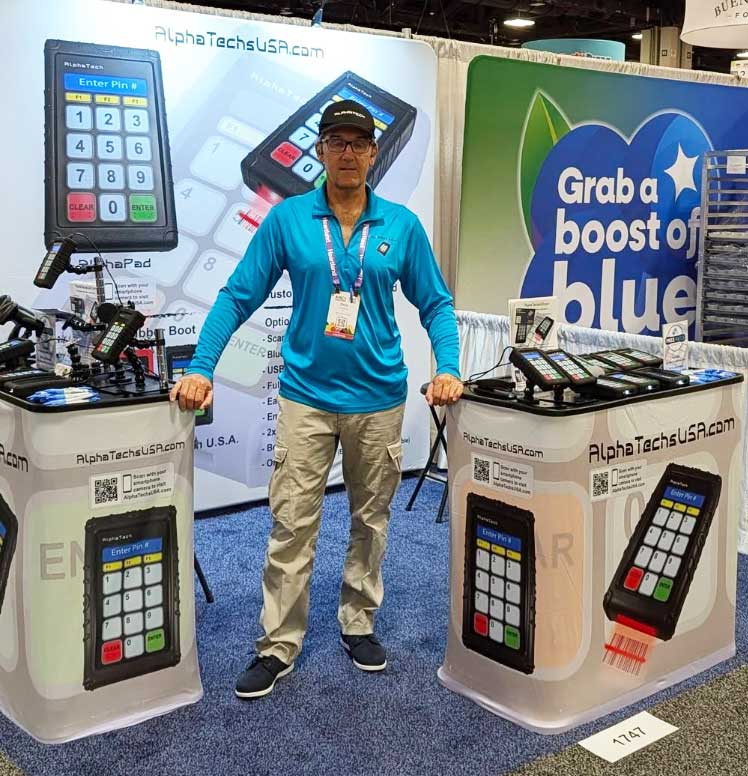
We were showcasing several input devices including Alphapad which allows students to manually enter school ID numbers and AlphaScan which makes it easy by just scanning their card thanks to popular barcode technology.
AlphaScan comes in 3 configurations including 1D scanner, 1D/2D QR barcode scanner as well as RFID code reader. Each unit comes with a free complementary anti-shock cover designed to keep your devices safe at all time.
Stand-alone readers were also available including orbital scanners, USB handheld barcode scanners and Bluetooth handheld barcode scanners. Each unit includes a free stand.
- Our pin pads and scanners are compatible with all US and Canadian school cafeteria POS Software.
- They are FCC-approved and assembled in the US.
- They include a 3-year warranty.
- They come with price match guarantee: we will match or beat the prices of key competitors. making them affordable for all US school districts.
FAQs
Q1. What are the major nutrition standard updates affecting school meal programs? Federal nutrition standards now require a 15% sodium reduction for lunch and 10% for breakfast by July 1, 2027. Added sugar restrictions will phase in between fall 2025 and fall 2027, limiting added sugars in cereals, yogurt, and milk, with weekly calories from added sugars capped at 10% by fall 2027. The whole grains requirement remains at 80% of weekly offerings.
Q2. What are the professional training requirements for school nutrition staff? Directors must complete 12 hours of annual training, managers need 10 hours, full-time staff require 6 hours, and part-time staff need 4 hours. School food authorities are responsible for tracking and documenting all training through agendas, sign-in sheets, or completion certificates.
Q3. When do schools need to implement the new menu changes? Schools face no mandatory menu changes until July 1, 2025, with full requirements phasing in through the 2027-28 school year. Current sodium limits remain in effect through June 30, 2027, giving programs time to adjust menus and procurement strategies.
Q4. What financial support is available to help districts meet the new standards? The USDA announced $20 million in equipment grants to support kitchen upgrades. Through the Healthy Meals Incentives Initiative, 264 small and rural school districts each received up to $150,000 to improve meal service operations. The School Food System Transformation Challenge Grants also support innovation through increased collaboration.
Q5. What are the updated income eligibility guidelines for free school meals? For the 2026-27 school year, free meal qualification is set at 130% of the federal poverty level, which equals $3,575 monthly for a four-person household.
References
[1] – https://schoolnutrition.org/category/sna-news/press-release/page/9/
[2] – https://schoolnutrition.org/conferences-events/annual-national-conference/anc-2026-press-kit/
[3] – https://www.fna.usda.gov/cn/school-nutrition-standards-updates/implementation-timeline-school-meals
[4] – https://www.usda.gov/about-usda/news/press-releases/2024/04/24/biden-harris-administration-announces-new-school-meal-standards-strengthen-child-nutrition
[5] – https://www.fna.usda.gov/cn/school-nutrition-standards-updates/whole-grains
[6] – https://www.pa.gov/agencies/education/newsroom/new-eligibility-guidelines-for-free-and-reduced-school-meals-announced-for-the-2026-27-school-year
[7] – https://www.ednc.org/7-8-2026-take-a-look-at-usdas-new-income-eligibility-guidelines-for-free-and-reduced-priced-school-lunches/
[8] – https://www.congress.gov/crs-product/R47522
[9] – https://educate.iowa.gov/pk-12/operation-support/nutrition-programs/school-meals/professional-standards
[10] – https://schoolnutrition.org/resource/position-paper-2026/
[11] – https://www.linq.com/blog/automating-k12-nutrition-to-solve-rising-costs-and-staff-shortages/
[12] – https://www.njsba.org/school-board-notes/new-school-meal-standards-to-strengthen-child-nutrition/
[13] – https://www.fna.usda.gov/cn/school-nutrition-standards-updates
[14] – https://www.linq.com/blog/the-power-of-collaboration-in-the-business-of-child-nutrition/
[15] – https://anc.schoolnutrition.org/faqs/
[16] – https://portal.ct.gov/-/media/sde/nutrition/nslp/mealpattern/sodium_limits_nslp_sbp.pdf
[17] – https://civileats.com/2026/03/13/school-nutrition-experts-wary-as-government-considers-new-policies/