
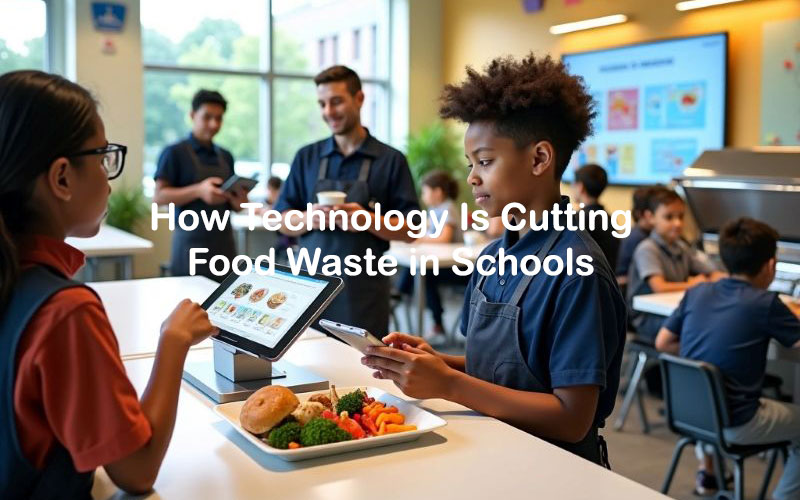
Food waste in schools is staggering. Studies show that 28.59% of meals in Italian primary schools go uneaten[33], and Swedish schools waste 23% of served food[33]. The food system contributes to at least 30% of all greenhouse gas emissions globally[33]. This makes the issue both an environmental crisis and an educational chance. Technology and food industry breakthroughs are changing how schools tackle this challenge. Research demonstrates that Farm to School programs can reduce waste by 17%[24] and proves that digital solutions work. This piece explores proven technology for food industry applications in educational settings. We cover everything from smart tracking systems to AI-powered planning tools and show you how to reduce food waste in schools through analytical solutions.
The Growing Problem of Food Waste in Schools
Understanding the Scale of School Food Waste
More than seven billion meals reach students enrolled in K-12 public schools each year[1]. The waste problem runs deep across this massive food service operation. A 2019 USDA study found that over 20 percent of food served in schools gets discarded[1], but the numbers spike higher for specific items. Milk and vegetables see roughly 30 percent waste rates[1], with nearly one-third of all vegetables and milk served through the National School Lunch Program ending up uneaten[2].
The per-student effect tells an even clearer story. Schools generate approximately 39.2 pounds of food waste per student each year[1], along with 28.7 cartons of milk waste per student[1]. Scale these figures nationally and we’re looking at 530,000 tons of food waste and 45 million gallons of milk waste each year[1]. Research shows that between 30 to 40 percent of all food produced for school meals never gets consumed[3]. This represents millions of missed opportunities to nourish students.
Environmental and Economic Effect
The environmental footprint extends beyond the cafeteria trash bins. Annual school food waste accounts for 1.9 million metric tons of embedded greenhouse gasses and 20.9 billion gallons of wasted water[1]. More than 400,000 tons of this waste heads to landfills each year, where it emits methane gas as it decays[1]. Just one ton diverted from landfills can avoid approximately 2.2 metric tons of CO2 equivalents[4].
The financial burden matches the environmental cost. Schools waste around $1.70 billion on discarded food each year[1]. Cutting cafeteria food waste by merely 1 percent could save about $0.03 per student annually[4]. These savings could fund improved meal quality or nutrition programs that many districts need.
Why Traditional Methods Fall Short
Current approaches struggle with fundamental structural problems. Students face an average of just 20 minutes for lunch periods. Actual seated eating time drops as low as 10 minutes in some schools[3]. This rushed environment leaves little room for students to finish their meals. Milk ranks among the most wasted items, with 30 to 40 percent discarded even when students are encouraged to take it[3].
Traditional food recovery initiatives face implementation gaps. Few states provide clear information on outreach to school communities. This limits the potential effect of share tables and donation programs[5]. Even well-intentioned solutions fall short when participation depends on unclear guidance and competing priorities.
Technology Solutions for Reducing Food Waste in Schools
Digital Food Waste Tracking and Audit Tools
Schools can measure waste patterns through specialized tracking software that automates data collection. Platforms like LeanPath use AI-enabled food recognition to identify waste types without manual input and achieve typical waste reductions of 50 percent or greater[6]. Winnow Solutions employs smart scales and image recognition technology. Restaurants report 30 percent waste reduction within months[7]. The EPA provides assessment tools including the Food Waste Assessment Guidebook and Paper Tracking Waste Logs[8][9]. Schools can conduct baseline audits with minimal labor investment.
Smart Cafeteria Management Systems
Modern cafeteria software uses data analytics and AI-based forecasting to predict meal needs based on attendance, previous consumption, and seasonal trends[10]. These systems automate meal order processing, billing, payment, and food waste monitoring with ease[11]. Live alerts and user details help modernize canteen management processes[12]. At-a-glance dashboards provide control over inventory, purchases, consumption, and budget allocation[13].
Inventory Management Software
Live stock tracking prevents overpurchasing and reduces spoilage through automated reordering thresholds and expiration date monitoring[14]. Schools can track food prices, monitor supply levels, and create menus according to available fresh ingredients[15]. Perpetual inventory systems allow constant awareness of stock levels[16]. Districts can highlight which sites manage operations most effectively.
AI-Powered Menu Planning Platforms
AI menu planning software creates balanced menu ideas based on HHFKA meal patterns while reducing the work to be done for production and nutrition labeling[17]. These platforms use forecasting tools and reporting insights to adjust quantities and manage leftovers[17]. They save resources while meeting nutrition standards.
Share Table Apps and Digital Donation Networks
MealConnect links food donations to local food pantries through a free platform available on smartphones, tablets, or computers[18]. An algorithm determines the best-suited local program to pick up donations quickly[18]. Share tables allow unopened cafeteria food to be placed on communal tables for additional student helpings[19].
Automated Portion Control Technology
Video and voice recognition systems detect equipment malfunctions and food spoilage[20]. They help track incoming shipments and expiration dates. AI algorithms learn from historical purchase data to forecast inventory needs with precision[20] and reduce excess stock levels.
How to Reduce Food Waste in Schools: Implementing Tech Solutions
Conducting Digital Food Waste Audits
Baseline measurement starts the implementation. The EPA, USDA, and University of Arkansas worked together to create a guide for students and school personnel to measure cafeteria waste[21]. Schools should assemble a technical advisory team that includes administrators, nutrition staff, and PTA members[22]. Student volunteers conduct the audit by interviewing peers about unfinished food items and recording responses on log sheets[22]. The guide shows that tracking both the weight of discarded items and student feedback helps the cafeteria staff adjust menus and preparation methods[22].
Training Staff on Technology Platforms
Georgia Tech’s dining services trained staff through LeanPath, which teaches food waste reduction strategies and gives the ability to make informed decisions[23]. The platform prevented $2,514 of food waste in 2023 since implementation in May 2022[23]. Staff training focuses on recognizing waste patterns and adjusting production quantities based on analytical insights.
Integrating Technology with Educational Programs
Farm to School food education programs can decrease food waste by 17%[24]. Schools incorporate waste audits into math and science curriculum. They use project planning, data collection, and analysis as learning opportunities[22]. Schools also create educational campaigns that connect everyday practices to environmental outcomes.
Student Engagement Through Tech-Based Initiatives
Georgia Tech deployed Raccoon Eyes, a student-founded initiative using AI and vision capabilities to show students visual feedback of wasted food during disposal[23]. The system recorded over 51,015 pounds of post-consumer waste and received 60,524 student comments about meals[23]. Student-led teams organize awareness campaigns and waste reduction challenges[24].
Proven Results and Success Stories from Schools in 2026
Case Studies: Schools Cutting Waste with Technology
Round Valley Elementary in Clinton Township School District measured over 200 pounds of total cafeteria waste during their first audit in a single day[25]. Cafeteria food waste had been cut in half by their second audit, and nearly 40 pounds of food that spread rather than trashed[25]. Briarwood Elementary in Kansas City achieved a 25% waste reduction through their cafeteria waste audit campaign in just one week[26].
Rise N Shine Foundation implemented food recovery programs in 50 schools across Montgomery County, Maryland[27]. Frederick County’s Lunch Out of Landfills program expanded to 36 schools and diverted over 80% of cafeteria waste[27].
Measurable Outcomes and Analytical Insights
NYC Title I Public Schools reduced cafeteria food waste by 35-50% through Mindful Choice Meals initiatives[28]. Food consumption increased by 15-40%. Lunch participation rose by 12%[28]. Machine learning models balanced production with what students just need, reducing food waste to 28% at university campuses[29].
Cost Savings and ROI from Tech Implementation
Restaurant food waste initiatives see a 7:1 ROI[30]. Kitchens using Winnow’s analytics cut food waste in half within 6-12 months[31]. An IT park with 5,000+ employees recorded a 60% reduction in food waste and saved ₹30 lakh within 12 months[32].
Conclusion
Technology has proven itself as a strong ally in reducing school food waste. AI-powered tracking systems and smart cafeteria management deliver measurable results. Schools achieve 25-50% waste reductions and solid ROI. We recommend starting with a baseline digital audit. Then implement the tracking and management tools that fit your budget. Your investment will pay dividends through cost savings and better-fed students while benefiting the environment.
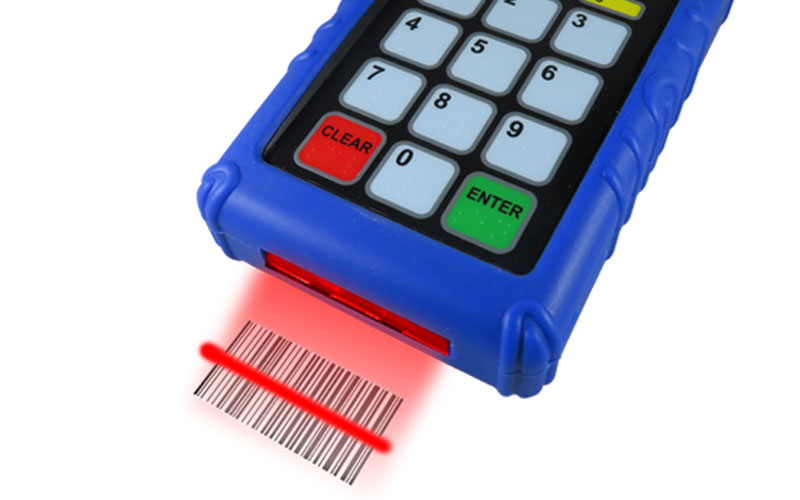
AlphaTechs USA offers a wide selection of Innovative Scanners for School Nutrition Departments
Specifically created for US school cafeterias, our pin pads, 1D scanners and 1D/2D QR barcode scanners and RFID code readers are compatible with all school lunch POS systems. Each unit comes with a free complementary anti-shock cover designed to keep your devices safe at all time.
Stand-alone readers are also available including orbital scanners, USB handheld barcode scanners as well as Bluetooth handheld barcode scanners.
For any school cafeteria POS scanner question, feel free to contact us.
References
[1] – https://www.nrdc.org/resources/model-state-law-reducing-food-waste-k-12-public-schools
[2] – https://www.cspi.org/sites/default/files/2023-08/2023 School Food Waste Fact Sheet.pdf
[3] – https://www.balanced.org/post/why-so-much-school-food-ends-up-in-the-trash-and-how-we-can-fix-it
[4] – https://wifitalents.com/food-waste-in-schools-statistics/
[5] – https://sneb.org/food-waste-in-k-12-schools-an-opportunity-to-create-more-equitable-and-sustainable-food-systems/
[6] – https://www.leanpath.com/products/
[7] – https://pmc.ncbi.nlm.nih.gov/articles/PMC11488428/
[8] – https://www.epa.gov/sustainable-management-food/tools-preventing-and-diverting-wasted-food
[9] – https://www.epa.gov/sustainable-management-food/resources-assessing-wasted-food
[10] – https://www.hungerbox.ai/blog/modern-cafeteria-management-for-educational-institutions/
[11] – https://www.efacilityusa.com/cafeteria-management-system/
[12] – https://foxit.pk/smart-canteen-management-system/
[13] – https://harrisschoolsolutions.com/blogposts/does-technology-have-a-seat-in-the-school-cafeteria/
[14] – https://goaudits.com/blog/food-waste-audit-and-software/
[15] – https://www.rti-inc.com/blog/how-to-run-cafeteria/
[16] – https://www.primeroedge.com/post/inventory-management-for-school-nutrition-programs-take-it-one-item-at-a-time
[17] – https://www.heartlandschoolsolutions.com/en/nutrition-technology/menu-planning
[18] – https://www.generalmillsfoodservice.com/press-releases/fight-food-waste-and-reduce-hunger
[19] – https://www.smchealth.org/sharetable
[20] – https://bakercommodities.com/blog/2024/02/07/how-to-add-automation-in-restaurants/
[21] – https://www.epa.gov/sustainable-management-food/guide-conducting-student-food-waste-audits-resource-schools
[22] – https://www.usda.gov/sites/default/files/documents/Student_Food_Waste_Audit_FINAL_4-6-2017.pdf
[23] – https://students.gatech.edu/news/reducing-food-waste-innovative-tech-dining-initiatives-0
[24] – https://foodrecovery.org/intern/school-programs-teaching-the-next-generation-about-food-waste/
[25] – https://www.njsba.org/news-information/school-leader/how-new-jersey-schools-are-tackling-food-waste-one-tray-at-a-time/
[26] – https://www.usgbc.org/resources/case-study-briarwood-elementary-charting-success-fight-against-food-waste
[27] – https://refed.org/events/reducing-food-waste-in-schools-transforming-cafeterias-through-community-driven-and-grassroots-initiatives/
[28] – https://cafeteriaculture.org/about/reports/
[29] – https://www.mdpi.com/2071-1050/17/2/379
[30] – https://blog.leanpath.com/restaurant-foodwaste-initiatives-see-7-to-1-roi
[31] – https://info.winnowsolutions.com/food-waste-technology
[32] – https://www.hungerbox.ai/blog/the-roi-of-automating-your-it-company-cafeteria/
[33] – https://pmc.ncbi.nlm.nih.gov/articles/PMC10252980/