Want to revolutionize your school cafeteria at food service trade shows next year? We’ve got you covered!
Food service industry trade shows are a great way to get opportunities for school cafeteria professionals to find innovations, network with peers, and remain competitive with emerging trends. The SNA Annual National Conference brings together the largest gathering of K-12 food service professionals who focus on advancing school meal programs through innovation, nutrition education, and operational excellence. These conferences feature more than 120 education sessions that cover nutrition, operations, administration, and marketing.
Food service equipment trade shows play a vital role in building stronger local food systems. Farm to school initiatives now exist in all 50 states, D.C., and U.S. Territories, while school cafeterias serve tens of millions of Americans daily. The U.S. food and beverage sector generates approximately $360 billion in GDP in 2024, and experts expect the U.S. packaged food market to reach USD 1,588.9 billion by 2030. School food service professionals need to stay informed about the latest developments.
This detailed guide to food service trade shows 2026 will show you 15 must-attend events that will help reshape your school cafeteria operations and lift your food service.
School Nutrition Industry Conference (SNIC)
The School Nutrition Industry Conference (SNIC) is the leading event for food service professionals who run school meal programs. This future-focused gathering connects key players from the nutrition sector.
The 2025 School Nutrition Industry Conference brings together school nutrition professionals and industry partners from across the nation. The event creates opportunities for mutually beneficial alliances, breakthroughs, and networking in the school food service sector. SNIC differs from other food service trade shows by targeting specific challenges in educational settings. Attendees can explore new products, services, and technologies in the large exhibit hall to improve their school nutrition programs. They get hands-on experience through demonstrations and interactive sessions that they can apply right away in their cafeterias.
The conference tackles urgent topics in school nutrition, such as new nutrition standards, emerging technologies, and fresh approaches to food service. Experts will share insights about trends and challenges in school nutrition programs during the three-day event. Workshops help develop strategic thinking and problem-solving abilities that cafeteria professionals need today. SNIC 2025 creates valuable connections between school nutrition professionals and industry partners through planned networking events. Special showcases highlight the latest solutions for modern school meal programs.
National School Breakfast Week
National School Breakfast Week (NSBW) stands out as a key event in the food service calendar that shows how morning meals matter in schools.
The week-long celebration recognizes how school breakfast helps students stay healthy and perform better in class. Since its launch in 1989, NSBW has spread awareness about the School Breakfast Program, which now feeds nearly 15 million children every day. These meals serve as the main source of nutrition for more than half the kids who take part. Students and staff will become breakfast detectives in 2025 with the “Clue In To School Breakfast” campaign that helps them find the benefits of starting their day with good food. This celebration fits perfectly with the food service industry’s bigger mission to boost nutrition through trade shows and learning programs.
Schools across the country make breakfast fun with creative promotions. They run photo contests like Montana’s yearly Breakfast Photo Contest, create special breakfast menus, and bring in local celebrities to serve food. The detective theme comes alive through puzzles, games, and challenges that make learning about breakfast exciting. Schools get creative by decorating their cafeterias with NSBW themes, letting kids taste new breakfast items, and running contests on social media. Many schools also team up with local farmers to bring fresh, homegrown food to breakfast tables.
Studies show that kids who eat school breakfast do better in class, come to school more often, and behave better. These students stay alert and happy throughout the morning, which makes learning easier. The quality of school meals has jumped by over 40% since the 2012 nutrition standards update. Schools that showcase their breakfast programs during NSBW often see more students joining in, and this event shows how school nutrition staff help children succeed.
Legislative Action Conference (LAC)
The Legislative Action Conference (LAC) brings together policy makers and school food service professionals to create a vital platform that strengthens educational nutrition programs.
This influential event’s main goal helps school food service professionals shape policies that affect meal programs. LAC gives participants an unmatched chance to see the democratic process firsthand and speak directly with lawmakers. The 2026 conference will focus on protecting school meals from proposed cuts that could hurt programs across the country. Participants will discover how to effectively reach out to legislators while building lasting connections with congressional representatives. This outreach becomes vital now as House Republican leaders think about federal spending cuts. These cuts would affect school meal programs and might lead to increased unpaid meal debt and administrative work.
LAC stands out among food service trade shows because it tackles policy head-on. The 2026 conference will tackle significant issues like the Community Eligibility Provision (CEP). This provision lets schools with high percentages of low-income students feed all students for free whatever their family income. Recent proposals would raise the ISP threshold from 25% to 60%, making over 24,000 schools lose program eligibility. Current reimbursement rates sit at about $4.50 per lunch. The SNA supports increasing these rates by 40 cents per lunch and 15 cents per breakfast to help operators handle rising costs. All the same, uncertain federal grant funding creates more challenges for school nutrition programs.
National Leadership Conference
Leadership development drives successful school food service programs. The National Leadership Conference (NLC) plays a vital role for professionals in this field.
National Leadership Conference focus
The NLC stands out from other food service industry trade shows because it focuses on building leadership skills instead of just showcasing products. Attendees get practical tools that help them lead school nutrition environments better. The conference goes beyond presentations and encourages interactive learning through TED Signs-style talks, dynamic breakout sessions, and regional caucuses. Participants find a space to grow both professionally and personally while connecting with other leaders who face the same challenges. The program centers on leadership resilience and teaches how to maintain peak performance without burning out—a crucial skill in today’s demanding school food service world.
National Leadership Conference for cafeteria managers
Cafeteria managers gain valuable skills from this focused professional development. The conference gives them:
Practical, science-backed strategies to manage stress while leading teams
A chance to network with peers nationwide
Tools to handle difficult conversations and create inclusive environments
The sessions help managers improve their workplace skills through topics like handling tough conversations and inclusive leadership. Hands-on activities take priority and directly boost job performance. This conference proves invaluable for managers who want to advance their careers because it emphasizes personal leadership growth rather than just operational knowledge.
School Lunch Hero Day
School Lunch Hero Day stands out as a special celebration in the food service world. This day honors cafeteria staff’s daily contributions in schools.
School Lunch Hero Day background
The celebration started in 2013 through a partnership between the School Nutrition Association (SNA) and Jarrett J. Krosoczka, who wrote the popular “Lunch Lady” graphic novel series. Krosoczka’s inspiration came when he visited his old elementary school and found his childhood lunch lady still remembered him. Today, school nutrition professionals serve over 30 million students each day. Their work shapes education in ways many people don’t notice.
School Lunch Hero Day celebration ideas
Schools use many creative ways to celebrate their cafeteria teams:
Official materials: Schools can personalize proclamations, get thank-you cards in English and Spanish, and use social media graphics with the Lunch Lady character
Student involvement: Classes can make cards, create hallway artwork, or write poems to show their thanks
Role reversal: Principals, teachers, or students can serve meals to cafeteria staff at decorated tables
Public recognition: Schools display messages on marquees, make morning announcements, and lead school-wide applause for cafeteria teams
School Lunch Hero Day impact on morale
School Lunch Hero Day improves workplace satisfaction among food service professionals. These celebrations show how cafeteria staff arrive before buses each day. They prepare both breakfast and lunch and connect with every student—something unique among school employees. The recognition also highlights their work with nutritional requirements, allergies, and meal planning. Many districts see this day as a way to build their team’s confidence and invest in staff development. While smaller than major food service trade shows 2025, this celebration helps keep staff motivated and improves service quality.
Annual National Conference (ANC)
The Annual National Conference (ANC) stands as the largest gathering of K-12 school nutrition professionals nationwide and people often call it the “School Nutrition Event of the Year.”
The conference offers over 120 education sessions focused on nutrition, operations, administration, and communications & marketing. Popular formats include:
90-minute deep-dive sessions with extended Q&A time
A dedicated Spanish-language track with English versions of sessions
Culinary Skills Labs that demonstrate breakfast and lunch recipes hands-on
Participants earn CEUs through various learning experiences, and all sessions feature AI-assisted translation and captioning.
The networking opportunities make ANC stand out from other food service trade shows in 2025. Nearly 360 companies will showcase the latest food, beverage, equipment, and state-of-the-art developments in the nation’s largest K-12 school nutrition-focused exhibit. Attendees build connections through receptions, meetups, shared meals, and membership section meetings. These gatherings let peers discuss challenges and create solutions together. The relationships formed during these interactions last well beyond the conference.
National Farm to Cafeteria Conference
The National Farm to Cafeteria Conference brings sustainable agriculture and institutional food service together. This milestone event creates vital connections between local farms and school meal programs.
The conference has adapted to meet modern food system challenges. It creates opportunities to build a resilient and fair food future while navigating policy changes and economic uncertainties. The 10th National Farm to Cafeteria Conference presents real solutions to current food system challenges. We focused on food sovereignty, farm to school practices, climate-resilient agriculture, and fair procurement strategies. The event creates space for people to connect, work together, and strengthen the farm to cafeteria movement across the country. The conference’s mission now aligns better with food system leaders’ needs nationwide.
School food service professionals will find this event different from typical food industry shows. It delivers content that matters to educational institutions. Participants can join workshops, breakout sessions, and hear from inspiring keynote speakers – all tailored for school nutrition and local food procurement experts. The conference features networking sessions and intensive courses like “Farm to ECE Deep Dive,” “Bringing the Farm to Table,” and “Creating and Sustaining School Gardens.” Attendees can also visit local farm to school sites. This event helps food service professionals boost their farm-to-school programs effectively.
FEED Foodservice Design Conference
The FEED (Foodservice Essentials for Effective Design) Workshop stands out from other food service trade shows. It creates a unique space where design expertise and practical kitchen implementation join together.
The workshop started as a complete project management program that brings four essential groups together—operators, consultants, manufacturers, and designers. These professionals engage in deep learning experiences. The curriculum covers everything from pre-design planning to project completion. Expert FCSI mentors share ground insights throughout, while manufacturer partners offer technical knowledge that focuses on project success rather than sales pitches. Participants consistently learn:
Practical knowledge they can use in current projects
Design principles that help avoid getting pricey mistakes
Professional relationships that last beyond the workshop
Fresh enthusiasm to accept new ideas in foodservice planning
FEED for school kitchen design
School cafeteria professionals find great value in FEED’s emphasis on strong infrastructure and design principles suited to institutional settings. The workshop equips participants with knowledge to work together effectively with foodservice consultants on facility design projects. The program shows how smart design affects both nutrition delivery and operational efficiency—vital elements in school cafeteria environments.
NAFEM Executive Summit
The North American Food Equipment Manufacturers (NAFEM) events are a great chance for school cafeteria professionals to learn about the latest advancements in food service equipment.
The NAFEM Show stands out among major food service industry trade shows as the only event dedicated to equipment and supplies. This biennial gathering attracts over 20,000 attendees who want to learn about commercial kitchen technology innovations. School cafeteria decision-makers can research solutions to streamline their operations. The show’s “Finding Your WOW” theme encourages participants to find game-changing equipment that can revolutionize their kitchens.
School foodservice professionals will benefit from solutions designed specifically for institutional settings. The exhibition showcases miles of products in food preparation, cooking, storage, and table service categories. Attendees can discover equipment innovations that boost kitchen safety, streamline operations, and support sustainability—priorities that matter more than ever in school settings. Exhibitors present technologies that help with labor shortages and energy efficiency challenges common in educational facilities.
Natural Products Expo West
Natural Products Expo West gives school nutrition professionals a great chance to find innovative, health-focused products for their cafeterias.
North America’s largest natural products event, Expo West 2026, will host over 64,000 attendees and 3,000+ exhibiting brands. The show features groundbreaking education sessions about industry trends, networking events, and new products spread across multiple exhibit halls. The first-ever CPG Innovation Summit takes place on March 3, bringing together 750+ attendees to talk about innovation frameworks and retail models of tomorrow.
School food service professionals can learn from educational sessions about nutrition trends, eco-friendly sourcing, and new innovations. The “State of Natural and Organic” keynote on March 5 shares vital industry data and consumer insights that help with school menu planning. The dedicated sessions cover topics that matter to institutional food service, such as eco-friendly packaging solutions and supplement quality—essential elements of detailed school nutrition programs.
RCA Annual Conference
The Research Chefs Association (RCA) Annual Conference and Culinology® Expo adds a unique flavor to food service trade shows. This event brings culinary arts and food science together in an exciting environment.
The RCA Conference represents the perfect blend of food science and culinary creativity. Chefs, food scientists, and food industry professionals come together to learn and work together on groundbreaking solutions. The conference helps attendees learn about how scientific principles and culinary techniques can work hand in hand. The 2025 program features specialized tracks that cover multiple disciplines. These include the Culinologist® Track that heads over to food science applications, the Chef Track that tackles product development trends, the Trends Track that spotlights emerging industry directions, and the Professional Development Track that builds leadership skills. These sessions are a great way to get knowledge about creating science-backed culinary solutions for institutional settings.
School food service professionals will find unique ways to boost their cafeteria offerings at this gathering. The breakout sessions and workshops cover everything from sustainability to alternative proteins—knowledge they can use right away in school menu planning. Chef David Burke’s keynote presentation on “Culinary Religion” gives fresh viewpoints on institutional food preparation. Students and professionals can showcase their skills in the Mixology Competition and Student Culinary Competition, which spark ideas for engaging school meal concepts. The exhibition floor features Bluegrass Ingredients (Booth 244) among others, showing culinary research, trends, and applications that schools can use.
Seafood Expo North America
Seafood Expo North America helps school cafeteria professionals add healthy, green seafood options that kids actually like to their menus.
Schools nationwide can learn from programs that have successfully added seafood to their menus. Public schools in Maine’s South Portland and Westbrook showed that students at every grade level love eating local fish. The results were impressive – Westbrook doubled its seafood portions while South Portland jumped from 760 pounds to 3,790 pounds per year. Seafood gives schools a “triple win” – it’s one of the healthiest proteins available in cafeterias, helps local fishing communities, and makes a climate-smart choice. Schools with students from different backgrounds find fish especially valuable because it connects with food traditions of immigrant, refugee, and asylee families.
The expo expresses the value of responsibly harvested seafood through sessions about transparency, traceability, and sustainability. Attendees can learn about breakthroughs like electronic monitoring systems that make supply chains more visible. Schools can also find exciting new products at the New Product Showcase, which features items like invasive green crab seafood broth. These connections build the market that New England fishermen need to keep providing responsibly harvested catch throughout the region.
Food Safety Summit
The Food Safety Summit stands out as the most targeted event among food service trade shows that helps school cafeteria teams prevent foodborne illness and maintain safety protocols.
The event welcomes food safety professionals who come together to share game-changing solutions for the industry’s future. Food Safety Magazine produces this event with the Educational Advisory Board’s carefully selected content from the field’s top speakers. Early registration will give you access to the most valuable sessions.
School nutrition professionals can gain specialized knowledge that directly applies to educational settings. The Summit tackles a critical concern for cafeteria operations – young children’s increased risk of foodborne illness. The sessions cover everything from maintaining proper temperatures to preventing cross-contamination and building complete food safety systems. This content matches the USDA’s Food-Safe Schools Action Guide, which helps nutrition directors build strong food safety cultures in their communities.
The program features essential workshops on “Traceability Next Steps” and “Effective Sanitation Basics” – both crucial for school food service operations. The “Finished Product Testing Isn’t the Answer” session shows better ways to approach quality control than end-product testing. Leaders from FDA, USDA-FSIS, AFDO, and CDC come together at the premier Town Hall event to discuss emerging food safety challenges.
National Restaurant Association Show
The National Restaurant Association Show brings state-of-the-art foodservice solutions to practical use in institutional settings.
This major culinary event provides specialized content for educational food programs. School professionals can learn from workshops like “Off-Premises Sales Growth and Trends” and “Compliance on the Line: Updates to the FDA Food Code” which directly apply to cafeteria operations. The National Restaurant Association Educational Foundation enhances the experience by hosting special events for ProStart students that introduce future culinary professionals to industry opportunities.
Recent shows have showcased AI-powered kitchen systems, eco-friendly packaging, and smart refrigeration that boost speed and efficiency. Vision AI tools lead the way in recent advances, with products like PreciTaste’s “Station Assistant” that monitors ingredient levels and tracks oven usage. New high-speed cooking equipment and eco-friendly packaging solutions support the growing off-premise ventures that modern school food programs need.
The Show creates valuable connections through special events like the Young Professionals Networking Party. Cafeteria managers can find solutions from over 2,000 suppliers who offer more than 900 product categories.
IDDBA Conference & Expo
School nutrition professionals can get fresh ideas about student-friendly dairy and bakery options at the International Dairy Deli Bakery Association (IDDBA) Conference.
School food service directors can connect with suppliers who have solutions perfect for cafeterias. The conference attracts decision-makers – about 80% of attendees have buying power or high-level roles. This makes it ideal to meet relevant suppliers. Attendees can learn practical ways to include dairy and bakery products that meet nutrition rules and match students’ priorities.
Visitors will see:
A lively “What’s in Store Live” area that brings trends and technology to life through hands-on demos
The third annual Cake’d Challenge where professional decorators compete in themed contests to show creativity under pressure
More than 10,000 industry professionals from over 40 countries plan to attend. Registering early makes sense. The event’s impact goes beyond the conference – exhibitors will donate about 200,000 pounds of food to Second Harvest Food Bank after it ends.
Conclusion
School cafeteria professionals who want to improve their programs in 2026 should invest in food service trade shows. We’ve looked at 15 key events that are a great way to get opportunities to find innovations, build valuable connections, and keep up with industry trends.
These events have something for everyone. You can focus on nutrition standards, equipment upgrades, policy advocacy, or leadership development. School Nutrition Association conferences like SNIC and ANC give specialized content that works well in K-12 settings. The National Restaurant Association Show and Natural Products Expo West showcase innovative products that can revolutionize your cafeteria’s menu.
When you participate in these trade shows, you’ll see real benefits through better operations, improved menu options, and stronger community ties. Many school districts face the same challenges with budget limits, nutrition requirements, and student participation. These challenges become easier to handle with the knowledge and resources you get at these events.
Starting your 2026 trade show planning early helps you make the most of your professional development budget. You won’t miss registration deadlines for popular events. You can also work with colleagues to attend different shows. This helps your district learn more while keeping travel costs down.
School nutrition programs must adapt to the food service world that changes faster than ever. These trade shows give you more than networking – they provide essential education to keep your cafeteria program competitive, compliant, and exciting for students. Which events will you choose to lift your school’s food service program in 2026?
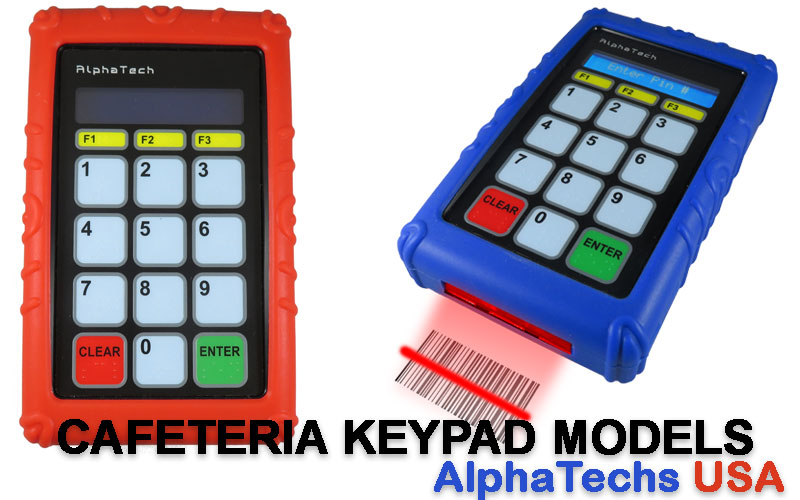
AlphaTechs USA offers a wide selection of innovative solutions designed to improve school lunch experience and make school lunch lines go faster.
Specifically created for US school cafeterias, our pin pads, 1D scanners and 1D/2D QR barcode scanners and RFID code readers are compatible with all school lunch POS systems. Each unit comes with a free complementary anti-shock cover designed to keep your devices safe at all time.
Stand-alone readers are also available including orbital scanners, USB handheld barcode scanners as well as Bluetooth handheld barcode scanners.
Our devices are compatible with all US school cafeteria POS systems.
For any school cafeteria scanner question, feel free to contact us.